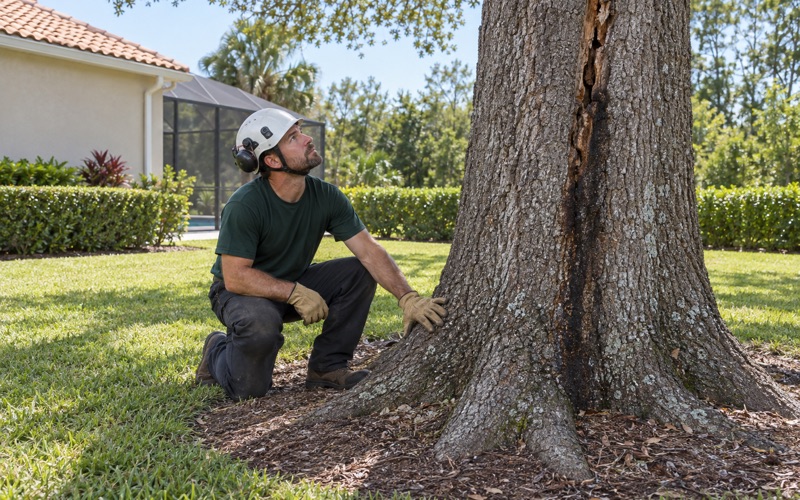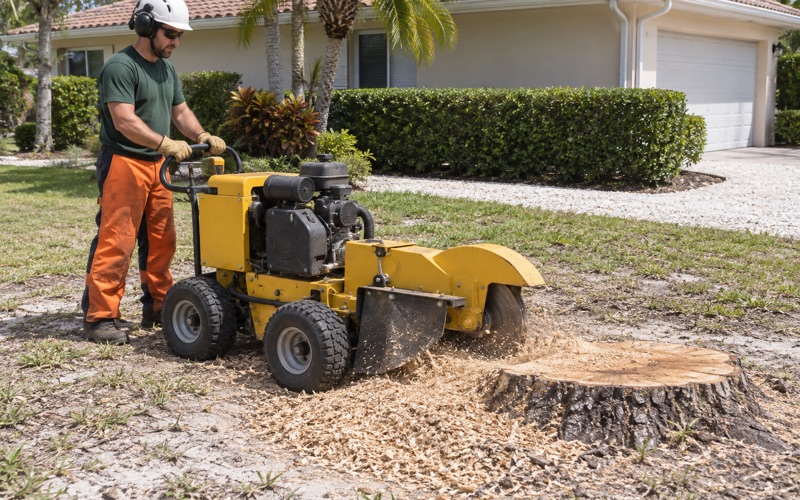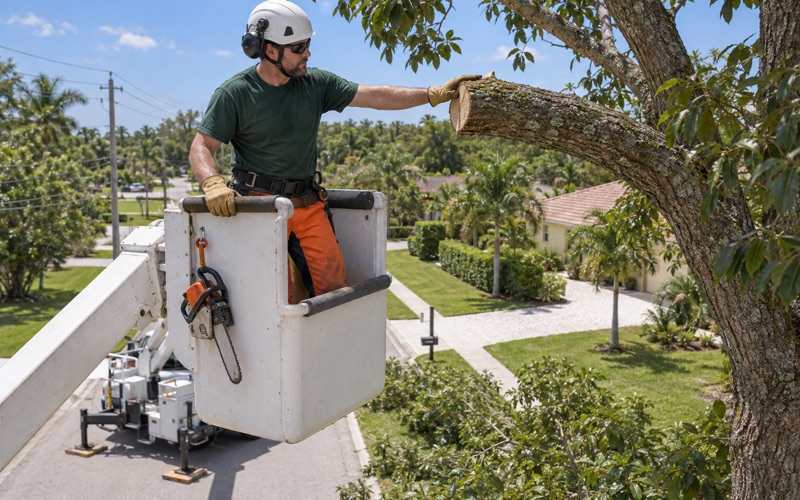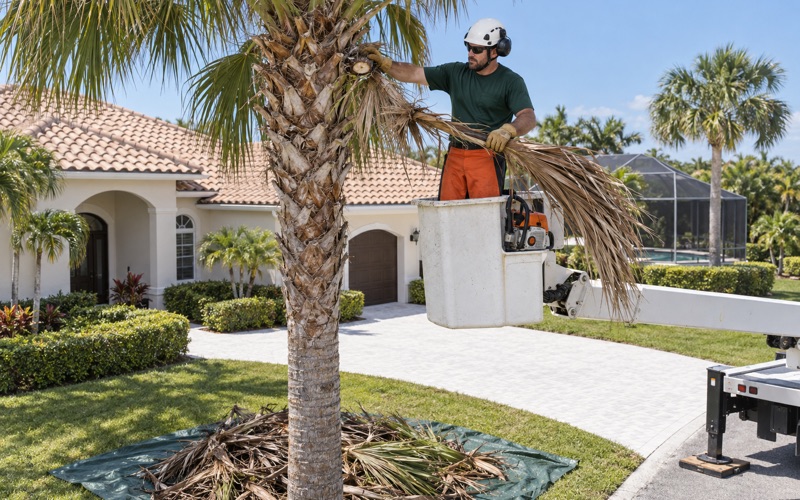
Bonita Springs Tree Removal handles tree removal in Fort Denaud with twenty-plus years of climbing, rigging and hauling behind every crew that pulls into a driveway here. We price the work in writing before a saw comes off the truck, with the hauling and disposal broken out on their own line so the cost of moving the wood is visible rather than buried in a lump sum. That single line matters more on this side of the county line than anywhere else we work, and the rest of this page explains why.
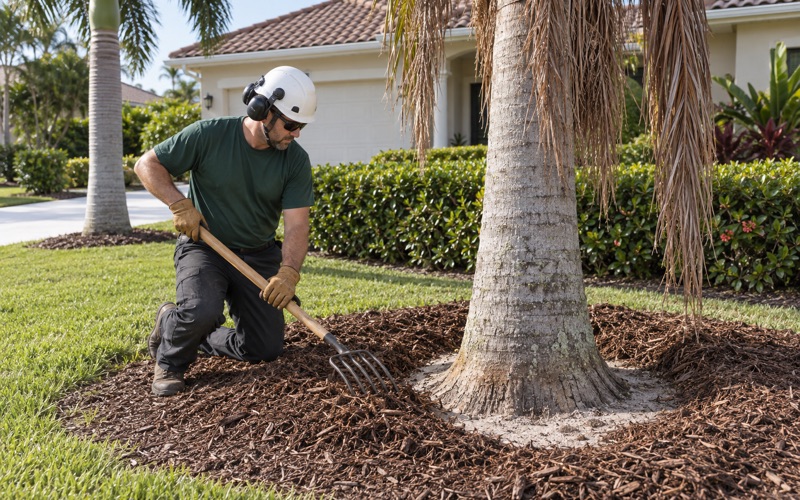
Our crews work across Lee, Collier and Hendry counties, and we keep the differences between them straight rather than pretending one rulebook covers all three. Every removal we recommend comes with a written condition report, so the reason a tree is coming down sits on the record before the work starts. We do not top trees, we do not hat rack them, and we do not cut hurricane cuts into palms, whoever asks us to. Palms and hardwoods get handled as the separate jobs they are, by people who know a palm has no branch collar to cut back to.
Unincorporated Hendry County, and who actually signs off
Fort Denaud is a census-designated place rather than an incorporated city, which means there is no city hall here, no municipal council, no municipal tree ordinance and no city arborist to call about a removal. The general-purpose local government at every address in the community is the Hendry County Board of County Commissioners, and the county’s land development code sits inside the Hendry County Code of Ordinances as a subpart of it rather than as a separate volume. Zoning and land use questions go to the Hendry County Planning and Zoning Department at (863) 675-5220.
That department publishes twenty-four land use applications by name, covering everything from a lot split and a variance to a site development plan, a rezone, a medical hardship and a minor spoil removal. Not one of them is a tree removal, a vegetation removal or a land clearing application. We read that as a searched negative rather than as silence, because a county’s own published application set is where such a form would live if it existed, and we will not quote you a section number out of a code we have not read.
The one tree rule that is certainly in force
Florida Statutes section 163.045 binds Hendry County exactly as it binds every other local government in the state. Where the property is a single-family detached building on a lot actively used for single-family residential purposes, and the owner holds signed documentation from an ISA-certified arborist or a Florida licensed landscape architect that the tree poses an unacceptable risk, the county may not require a notice, application, approval, permit, fee or mitigation, and subsection three bars any replanting requirement. There are 374 owner-occupied one-unit detached homes here, and that is the shape of most of the residential work we are called out for.
The same statute is why nobody doing this work in Florida carries a state tree contractor license, and why Hendry County cannot issue one either: section 163.211 preempts local occupational licensing, and the grandfathered local licenses issued before 2021 expired on July 1, 2025. What a homeowner should actually verify is ISA certification, general liability coverage and workers’ compensation, because the certified arborist is the person the statute allows to sign the documentation in the first place.
Looking for tree-removal closer to Marco Island? See Marco Island Tree-Removal.
The same wood, the same scale, and five dollars a ton more
Lee County Solid Waste runs the disposal gates a Fort Denaud crew actually uses, including the Lee-Hendry Regional Solid Waste Disposal Facility at 5500 Church Road in Felda, which is Lee County’s landfill sited inside Hendry County. Its FY26 rate card carries two origin classes side by side at that one location code, and they price the identical material differently. Hendry horticulture runs $48.92 per ton against $43.92 per ton for landfill horticulture, on the same scale, at the same gate, on the same day.
The premium is not confined to brush. The same table lists garbage at $95.28 per ton for Hendry-origin loads against $69.83 for Lee-origin, and construction and demolition debris at $75.25 against $70.25, each with a $15.00 minimum. Origin is the variable, not the material and not the truck, which is why a job on this side of the line prices out differently from an identical job a few miles west. Horticultural waste carries a five dollar per ton premium and garbage carries a $25.45 per ton premium, and both land on the disposal line of an estimate rather than somewhere invisible.
Where the wood actually goes
The nearest gate to most Fort Denaud addresses is the LaBelle Transfer Station at 1280 Forestry Division Road, and it is a staging point rather than a disposal site, since Lee County Solid Waste states plainly that no waste is disposed of at either of its Hendry transfer stations. Both stations take municipal solid waste, construction and demolition debris and horticultural waste, and both keep convenience boxes available for citizen use. Which gate a load goes to, and what it costs when it arrives, is something we put in the written estimate rather than leave to the end of the job.
The rate card also refuses material by class at that specific gate: commercial tires and the tires one-to-four class carry a footnote saying they are not accepted at the Lee-Hendry Landfill. That is worth knowing before a mixed cleanup load is built, because a refused item at the scale house is a second trip rather than a surcharge. We separate horticultural waste from construction debris on the truck for the same reason, since the two are priced and gated separately once they leave the property.
What the curb will take, and what a tree job produces
Residential collection in unincorporated Hendry County is franchised to Waste Connections, which serves the unincorporated county and the City of LaBelle, and the program runs under County Ordinance 88-9 through the county’s Special Districts office on Utility Drive in LaBelle. Yard waste goes out in a 35-gallon can, in plastic bags, or tied in bundles, none of it over 40 pounds, with bundles limited to four feet in length and four inches in diameter. Pickups are on Wednesday. Construction debris is handled separately from that program altogether.
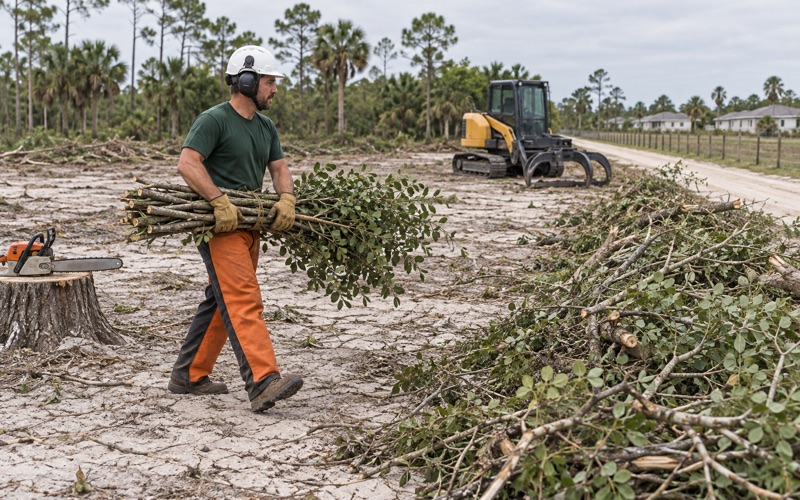
A four-inch, four-foot, forty-pound bundle is smaller than a single limb off a mature laurel oak, which is the practical reason a removal here cannot end at the curb. The wood from one takedown is measured in tons and weighed at a scale house, not stacked in bundles for a Wednesday truck. Leaving it in the right-of-way is also the fastest way to attract attention from Hendry County Code Enforcement, whose published complaint list names trash in the right-of-way and junk-like conditions and debris among the things it handles.
Estimates that show the haul
Because origin sets the gate rate here, and because the curb takes none of it, we quote hauling and disposal as their own line rather than folding them into a cutting price. A property owner can then see what the wood costs to move, compare it against what a neighbor across the county line was quoted, and understand why the two numbers differ. For seasonal and second-home owners who are not standing in the yard, we send that estimate with written findings and photographs so the inspection still means something from out of state.
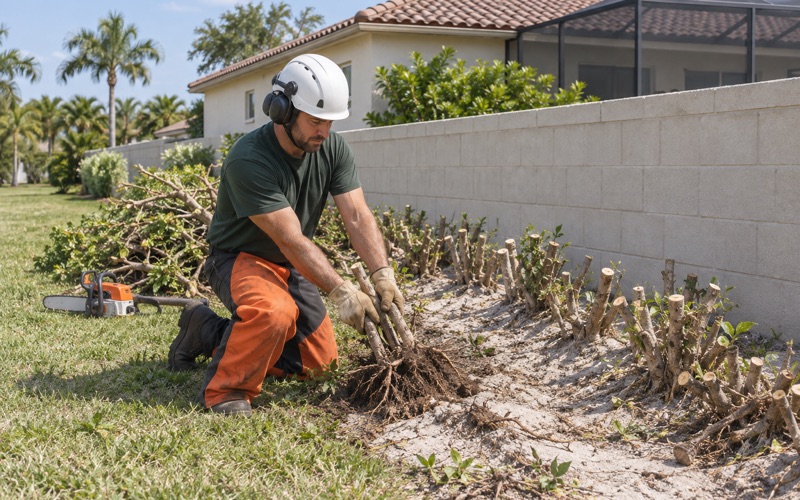
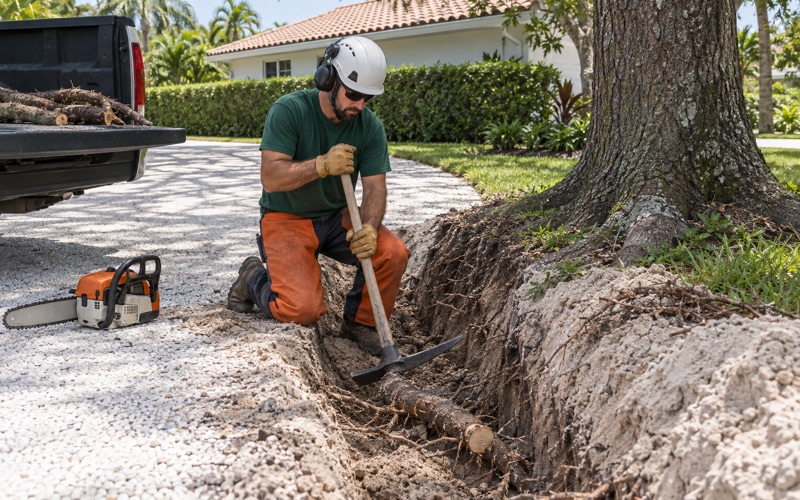
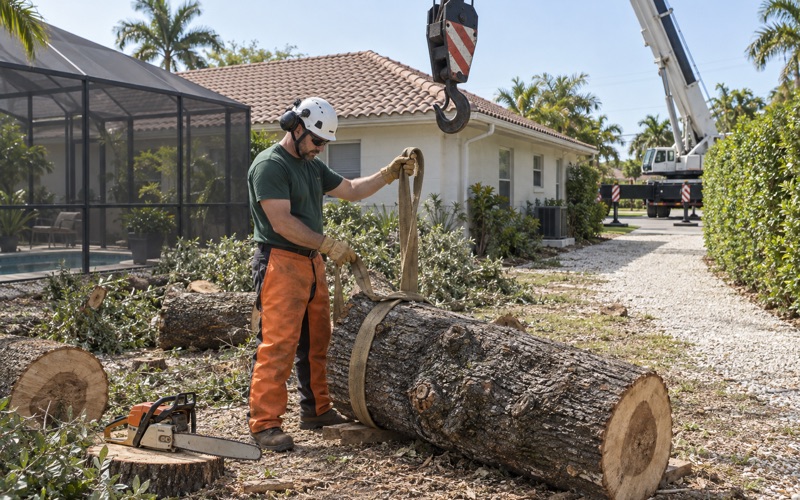
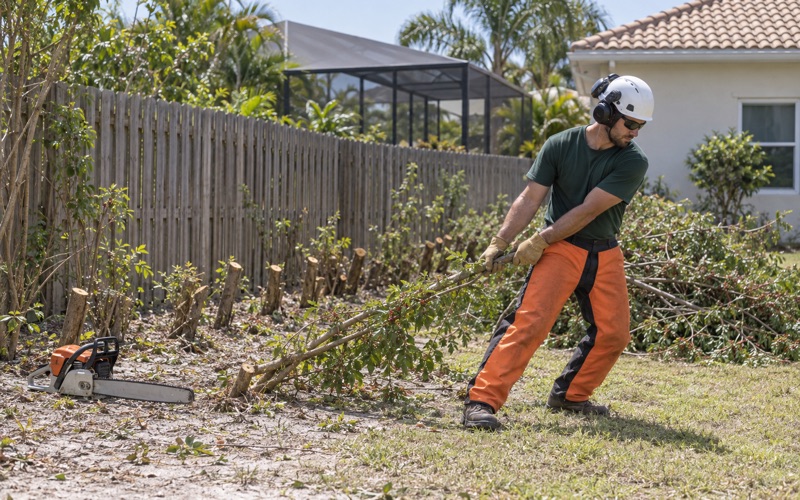
Access decides how much of that line is machine work and how much is rope and rigging. On the rural river parcels here we can often bring equipment straight to the trunk, while a fenced yard takes a narrow-gate machine and a tight drop zone takes a crane pick instead. We size the approach to the property before quoting it, because guessing at access is how a disposal estimate turns into a change order.
What changes about the work at a Fort Denaud address
A different weather office writes the warnings
The National Weather Service draws a County Warning Area boundary through our service map, and Fort Denaud sits on the far side of it. The point lookup here returns forecast office MFL in Miami, public forecast zone FLZ066, county zone FLC051, fire weather zone FLZ266 and radar station KTBW. Lee County places a few miles west fall to the Tampa Bay office in public zone FLZ265 and county zone FLC071. Watches, warnings and fire weather products for this address are written by a different office than the ones covering a job across the line.
That matters when a storm week is being scheduled rather than survived. We book storm-season work before the season instead of scrambling after it, and on this side of the boundary the products we are watching, the timing of the advisories and the fire weather outlook all originate from Miami rather than Tampa Bay. When the two offices phrase a marginal day differently, the crew here follows the office that actually covers the ground under the tree.
Fire response is a county department here
Emergency response in Hendry County comes from Hendry County Public Safety, which names itself as EMS and Fire and states that it covers 1,190 square miles with five ALS ambulances. There is no separately incorporated fire control district here with its own elected board and its own millage. Fire protection in the unincorporated county runs through that department and through the county’s Special Districts and MSBU structure, which is also where lighting, drainage, road maintenance and waste management sit.
Hardpan, high water and what sits in the drop zone
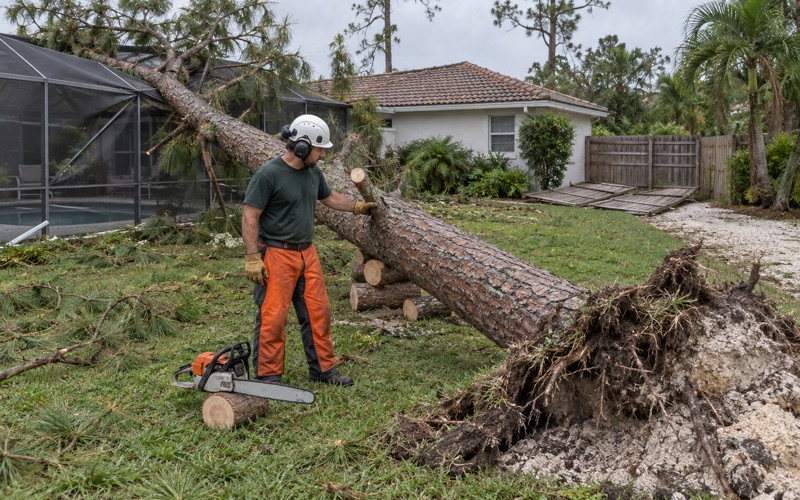
The ground matters as much as the sky on a removal here. In the flatwoods and lowlands the limiting layer is a hardpan and a shallow seasonal water table rather than rock, and the published series descriptions put the spodic horizon at 30 to 50 inches, with the water table within 6 to 18 inches of the surface for one to four months in most years. On a river flat that means a broad, shallow root plate in saturated sand, and the months when the table is high are the months a mature tree is least anchored.
Roughly one dwelling in six here is a boat, an RV or a van, 161 units and 17.2% of the housing stock, and that changes a drop zone in specific ways. Light-gauge awnings, carports and screen rooms fold under a limb that would only dent a roof; stored boats and trailers have to be moved rather than covered; and hookups, pedestals and tie-downs sit at grade exactly where an outrigger or a crane mat wants to go. The one advantage is that a unit can often be driven clear before the first cut, which a house cannot.
- 20+ Years on This Coast
- Written Estimate Before Any Cut
- No Topping, No Hurricane Cuts